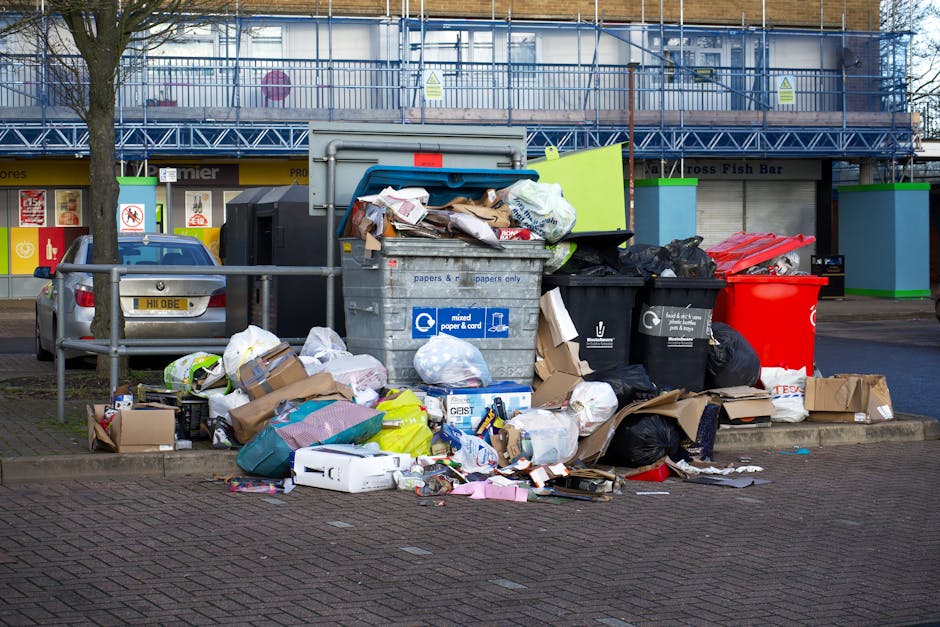
Real cost guide to rubbish clearance in Leyton and Leytonstone

If you are trying to work out the real cost guide to rubbish clearance in Leyton and Leytonstone, you are probably at that awkward stage where the clutter is no longer just clutter. It is in the way, it smells a bit if it has been sitting too long, and you are trying to decide whether to shift it yourself or bring in a professional team. Fair enough. That decision usually comes down to more than just price.
This guide breaks down what affects rubbish clearance costs in the local area, how jobs are usually priced, what can push the bill up or down, and how to avoid the little surprises that catch people out. You will also find a practical checklist, a comparison table, and a clear example of how a real-world clearance might be quoted. No fluff. Just the kind of detail that helps you make a sensible choice.
Table of contents
- Why Real cost guide to rubbish clearance in Leyton and Leytonstone Matters
- How Real cost guide to rubbish clearance in Leyton and Leytonstone Works
- Key Benefits and Practical Advantages
- Who This Is For and When It Makes Sense
- Step-by-Step Guidance
- Expert Tips for Better Results
- Common Mistakes to Avoid
- Tools, Resources and Recommendations
- Law, Compliance, Standards, or Best Practice
- Options, Methods, or Comparison Table
- Case Study or Real-World Example
- Practical Checklist
- Conclusion
- Frequently Asked Questions
Why Real cost guide to rubbish clearance in Leyton and Leytonstone Matters
Rubbish clearance sounds simple until you start pricing it properly. A couple of bags may be easy enough to move, but once you are dealing with bulky furniture, mixed household waste, builder's rubble, garden waste, or a full room's worth of stuff from a flat, the cost picture changes quite a lot. That is why a proper cost guide matters: it helps you compare like with like rather than just chasing the cheapest number.
In Leyton and Leytonstone, the local mix of terraced houses, flats, rear access lanes, tight parking, and busy roads can affect how quickly a clearance team can work. And speed matters. If the crew has to park further away, carry items through narrow hallways, or make multiple trips, that time shows up somewhere in the price. Not always dramatically, but enough to notice.
There is also the question of disposal route. A reputable clearance service should separate reusable items, recyclable materials, and general waste where practical. If you are comparing quotes, ask what is included. A "cheap" quote that excludes labour, loading, disposal, or VAT can stop feeling cheap very quickly. Been there, seen that.
Key takeaway: the real cost of rubbish clearance is not just about the pile itself. It is about access, labour, disposal, waste type, and how efficiently the job can be completed.
How Real cost guide to rubbish clearance in Leyton and Leytonstone Works
Most rubbish clearance jobs are priced using a mixture of volume, weight, labour time, and disposal charges. In plain English, the bigger, heavier, messier, or more awkward the job, the more it will likely cost. A simple sofa collection is a very different job from clearing a damp garage full of mixed junk, paint tins, timber offcuts, and old appliances.
A professional team will usually want to know:
- what needs removing
- roughly how much there is
- where it is located in the property
- how easy it is to access
- whether parking is straightforward
- if anything is especially heavy, sharp, hazardous, or awkward
From there, the service may quote by load size, by item, or by estimated labour. Some jobs are very straightforward. Others need a site visit or at least a careful photo assessment. If you send clear pictures, with a bit of context, you usually get a more accurate quote. A dark blurry photo of a corner piled high with bags is not ideal, let's face it.
For some customers, the service is part of a wider clearance job. That might mean pairing rubbish removal with house clearance, flat clearance, or even a more targeted job like furniture disposal. If you are clearing a whole property, a single organised visit is often better value than splitting the work into bits and pieces.
To be fair, pricing is easier to understand once you see how the job breaks down. A wardrobe on the ground floor, near the front door, is one thing. A broken wardrobe on the third floor with no lift is another. Same item, very different effort.
Key Benefits and Practical Advantages
The most obvious benefit is convenience, but there is a bit more to it than that. Hiring a rubbish clearance service can save time, reduce stress, and help you avoid the physical strain of moving heavy waste yourself. In a busy London week, that can be a bigger win than people expect.
- Less manual lifting: useful if you are dealing with heavy furniture, bags of mixed waste, or bulky items.
- Faster turnaround: especially helpful before a move, tenancy change, sale, or renovation.
- Better sorting: reusable, recyclable, and disposable materials can be handled more sensibly.
- Cleaner finish: a proper clearance leaves the space ready for cleaning, decorating, or refitting.
- Less disruption: one organised visit is usually less stressful than multiple trips to a tip, assuming you even have the time.
Another practical advantage is predictability. When you know what the service includes, you can budget with more confidence. That matters for landlords, tenants, homeowners, shop owners, and tradespeople alike. Nobody enjoys an invoice that feels like a mystery novel.
There is also a quieter benefit: peace of mind. If waste is handled properly, you are less likely to run into problems with fly-tipping, blocked communal areas, or complaints from neighbours. In busy parts of Leyton and Leytonstone, that matters more than people sometimes admit.
Who This Is For and When It Makes Sense
This kind of service is useful for a lot of people, not just homeowners with overflowing sheds. In fact, some of the most common users are practical, time-poor people who simply need the job done properly and quickly.
- Homeowners clearing lofts, garages, spare rooms, or post-renovation waste.
- Tenants needing to empty a flat before check-out or avoid deposit deductions.
- Landlords and letting agents dealing with end-of-tenancy clutter or abandoned items.
- Tradespeople who need builder's waste removed after a job.
- Businesses clearing stock, office clutter, or redundant equipment.
If your waste is only a few bags and you already have vehicle access, a self-managed trip may make sense. But if the waste is bulky, awkward, dirty, or scattered across the property, a professional clearance can be better value than it first appears. Especially if your own time is worth something. It usually is.
For example, a family clearing out a garage after years of "I'll deal with that later" might start with a few items and end up with a full load. That is the point where professional help becomes sensible. Same with a small office replacing old desks, chairs, and filing units. For those cases, services like office clearance or business waste can be more appropriate than general rubbish removal alone.
Step-by-Step Guidance
Here is the cleanest way to approach a rubbish clearance quote in Leyton or Leytonstone without overpaying or underestimating the job.
- List everything that needs removing. Walk through the room, garden, garage, or office and note the main item types.
- Separate the waste mentally. General rubbish, furniture, green waste, builders' waste, and electricals are not all treated the same.
- Take clear photos. Wide shots plus close-ups help a lot. If there is a stairwell, tight corner, or awkward access, photograph that too.
- Check parking and access. In London, this can affect time on site more than people realise.
- Ask what the quote includes. Labour, loading, disposal, VAT, and any minimum charge should be clear.
- Confirm what will not be taken. Some items may need special handling, and it is better to know early.
- Choose a suitable service type. For example, garden material may fit garden clearance, while broken concrete or renovation debris may need builders' waste handling.
A useful trick: ask yourself whether the job is a "single load" problem or a "property clearance" problem. If it is the latter, the scope needs to be priced more carefully, because hidden items always appear. There is always one more chair. Always.
Once you have the quote, compare it with two questions: is the price reasonable for the amount of labour involved, and is it clear enough that there are no surprises later? That simple filter removes a lot of weak offers.
Expert Tips for Better Results
Here are the small things that make a big difference. Nothing flashy. Just the sort of practical detail that keeps the job smooth and the quote fair.
- Sort anything reusable first. If furniture can be reused or donated elsewhere, remove it from the waste pile before the clearance team arrives.
- Group similar materials together. Bags of household waste, timber, soil, and furniture are easier to assess when they are not mixed into one chaotic mound.
- Keep access clear. A hallway filled with boxes and broken lamps slows everything down.
- Be honest about weight and condition. Wet mattresses, soil-filled bags, and dense rubble are not minor details.
- Book with a realistic time window. Rushing usually creates stress, and stress is expensive in its own odd little way.
If you are clearing a sofa, remember that large upholstered items can be awkward to remove from flats and narrow staircases. In those cases, a dedicated sofa removal service may be more efficient than trying to bundle it in with other waste. Same with shed contents or awkward garage clutter: a targeted garage clearance can save time because the team already knows the kind of load they are facing.
One more thing. Ask whether the team can handle the load in one visit. A first visit that only removes part of the pile can be fine, but if you were expecting everything gone and half the garage is still there, that is no fun at all.
Common Mistakes to Avoid
Most unpleasant pricing surprises come from the same handful of mistakes. Once you know them, they are easy enough to avoid.
- Comparing quotes without checking what is included. One quote may cover everything, while another only covers collection.
- Underestimating volume. A pile looks small from one angle and huge from another. Happens all the time.
- Ignoring access issues. Narrow stairs, no lift, or poor parking can change the real effort involved.
- Mixing hazardous items with general waste. Paints, chemicals, sharps, and some electrical items may need separate handling.
- Waiting too long. Delays can turn a manageable clearance into a rushed job with less choice and less flexibility.
Another common mistake is using the wrong service type. For example, waste from renovations is not the same as office furniture, and green waste is not the same as old appliances. If you match the job to the right service, the cost tends to be cleaner and the process smoother. Simple as that, really.
And do not forget the hidden factor of time. A job that should take one hour can take three if access is poor or the waste has to be carried from the back garden through the house. That is often where the real difference lies.
Tools, Resources and Recommendations
You do not need a huge toolkit to prepare for rubbish clearance, but a few basic tools help the process a lot.
- Heavy-duty bin bags for loose light waste.
- Gloves for sharp edges, dust, and general handling.
- Measuring tape if you need to estimate the size of bulky items.
- Phone camera for clear photos of the load and access route.
- Labels or tape if you want to mark what should stay and what should go.
In terms of service planning, it can help to think in categories. General household clutter may fit rubbish clearance or rubbish removal, while larger mixed loads may be better discussed as waste clearance. If you are managing a business site, waste collection or waste removal might be the better fit depending on how often the waste builds up.
One practical recommendation: if the job includes bulky household items that are still in decent condition, check whether they are better handled as furniture disposal rather than mixed rubbish. It is not always about cost. Sometimes it is just about getting the right outcome with the least fuss.
Law, Compliance, Standards, or Best Practice
When rubbish is being cleared professionally, there are a few important best-practice points to keep in mind. You do not need to become a waste expert, but you should know the basics.
First, waste should be handled and disposed of responsibly. That means the team should not simply dump it somewhere unsuitable. Second, certain items need special care. Electrical items, sharp materials, chemicals, paint, and some construction debris may require separate handling or may not be accepted in a standard mixed load. Third, if you are a business or landlord, you should take reasonable care over how waste is removed and who is dealing with it.
In everyday terms, the safest approach is to ask clear questions before booking:
- what types of waste are accepted
- how mixed loads are handled
- whether any items need separating in advance
- what documentation or confirmation you will receive
Good operators usually welcome those questions. In fact, if someone seems annoyed by them, that is a bit of a yellow flag. You want a straightforward, transparent process, especially where cost and disposal responsibility are concerned.
For builders and renovators, proper handling matters even more. Debris from plaster, timber, tiles, and heavy rubble can create more disposal complexity than a normal household load. That is where a service focused on builders waste becomes a more sensible route than a generic one-size-fits-all pickup.
Options, Methods, or Comparison Table
There is more than one way to clear rubbish in Leyton and Leytonstone. The best option depends on load size, access, urgency, and whether the waste is general, bulky, or specialist. Here is a simple comparison.
| Method | Best for | Typical pros | Possible downsides |
|---|---|---|---|
| Self-clearance | Small loads, easy access, available vehicle | Can be cheaper if you already have transport | Time-consuming, physical effort, disposal logistics |
| General rubbish clearance | Mixed household clutter, bags, small furniture | Convenient, quick, often priced by load | May not suit heavy or specialist waste |
| Property clearance | Whole flats, houses, garages, or multiple rooms | Efficient for larger jobs and time-sensitive moves | Needs more accurate assessment |
| Specialist waste removal | Builders' waste, garden waste, office waste, furniture | Better matching of service to waste type | May require more detailed sorting |
For many local customers, the choice is between doing a small amount themselves and paying for a proper clearance of a bigger or more awkward load. If you only have two bags, self-clearance may be fine. If you have a room full of items and a tight deadline, paying for help is often the smarter move. Not glamorous, but smart.
Case Study or Real-World Example
Here is a realistic example based on the kind of job people often face in Leytonstone. A family had just finished sorting a spare room and a hallway cupboard after a house move. At first glance, it looked like "a few bits." But once the pile was gathered properly, it included a broken chest of drawers, several bagged general waste items, an old desk chair, two side tables, a small wardrobe door, and assorted packaging.
The main cost factors were not the furniture itself. It was the access and the sorting. The property had a narrow staircase, parking was not directly outside, and a couple of items needed careful carrying through a shared entrance. The job was still straightforward, but it was not the tiny, five-minute collection the family had initially imagined.
What helped most was sending clear photos and listing the items honestly. That meant the quote could reflect the actual work rather than guesswork. It also meant the team arrived ready with the right labour and vehicle space. The result: a one-visit clearance, less stress, and a room left clear enough for decorating the next day. The family had that slightly relieved look people get when a messy chapter finally ends.
The bigger lesson? Accurate information usually leads to a better price. Not always the lowest possible price, but a fair one. And fair is what most people actually want.
Practical Checklist
Use this before you book, and you will avoid most of the common headaches.
- Identify exactly what needs removing.
- Separate general waste from furniture, garden waste, and building debris if possible.
- Take clear photos of the items and the access route.
- Check whether parking or loading access may be awkward.
- Ask what is included in the quote.
- Confirm whether VAT or any minimum charge applies.
- Ask about restricted or hazardous items before the visit.
- Decide whether you need a general clearance or a more specific service.
- Keep paths and hallways clear on the day.
- Set aside anything you want to keep before the team arrives.
That is the sort of prep that saves time, avoids confusion, and makes the whole thing feel much less hectic. A small bit of planning goes a long way.
Get a free quote today and see how much you can save.
Conclusion
The real cost guide to rubbish clearance in Leyton and Leytonstone comes down to a few honest variables: what you need removed, how much there is, how hard it is to access, and what kind of waste it actually is. Once you understand those moving parts, the pricing starts to make sense. That alone removes a lot of stress.
If you are comparing options, focus on clarity rather than just headline price. A good quote should be easy to understand, realistic for the job, and transparent about what is included. That is what helps you avoid awkward surprises and get the space cleared properly the first time.
And if the clutter has been hanging around for a while, do not worry too much. It happens. One clear step at a time is usually enough to get the place back under control.
Frequently Asked Questions
How much does rubbish clearance usually cost in Leyton and Leytonstone?
It depends on the volume, waste type, access, labour involved, and disposal requirements. Small loads cost less, while bulky, heavy, or hard-to-reach clearances cost more. The best way to get a realistic figure is to share photos and a short description of the job.
Is rubbish clearance cheaper than hiring a van and doing it myself?
Sometimes yes, sometimes no. If you only have a few bags and easy transport, self-clearance can be cheaper. But once you factor in fuel, time, lifting, parking, and disposal, a professional clearance can offer better value for larger or awkward jobs.
What affects the price the most?
Volume is a big factor, but access is close behind. A ground-floor load with easy parking is simpler than a third-floor flat with no lift. The type of waste matters too, because furniture, builders' waste, and garden waste are not handled the same way.
Do I need to sort the rubbish before collection?
It helps if you can separate obvious categories like furniture, general waste, and garden material. You do not always need to sort everything perfectly, but some organisation makes the quote more accurate and the job quicker on the day.
Can you clear waste from a flat with stairs?
Yes, but stair access can affect both price and timing. If the stairs are narrow or the items are large, tell the provider in advance. That way, they can plan the labour properly and avoid delays.
What happens to the rubbish after it is collected?
Usually it is taken for sorting and disposal through appropriate waste routes. Reusable or recyclable material may be separated where practical. The exact process depends on the type of waste and the service provider's operating method.
Are furniture items priced differently from mixed rubbish?
They often are. Large furniture can take more labour to move, while mixed rubbish may involve different disposal costs. If you have sofas, wardrobes, or other bulky items, it may be worth looking at a more specific service such as furniture disposal or sofa removal.
What if I only need a small amount removed?
Small loads can still be worth booking if you want the job done quickly and cleanly. Many people use rubbish clearance for a handful of items rather than a full clearance. The key is whether the convenience is worth the price to you.
Can rubbish clearance include garden waste or builders' debris?
Yes, but those materials are usually best discussed separately because they behave differently in pricing and disposal. Garden waste and builders' waste can be heavier, dirtier, or more awkward than general household rubbish.
How do I avoid hidden charges?
Ask what the quote includes before booking. Check whether labour, loading, disposal, VAT, and any minimum charge are included. Also be clear about access, parking, and waste type, because unclear information is where most surprises come from.
Is same-day rubbish clearance possible?
Often it is, depending on availability and the size of the job. Same-day collections are more likely when the load is straightforward and the access is easy. For bigger or more complicated clearances, a little lead time helps.
When should I choose a full house clearance instead of standard rubbish removal?
If you are emptying a whole property, several rooms, or a mix of furniture and general waste, a full house clearance may be the better fit. It is usually more efficient than treating everything as separate small rubbish jobs.